The Monkey Trial
What Can Happen If We Don't Pay Attention

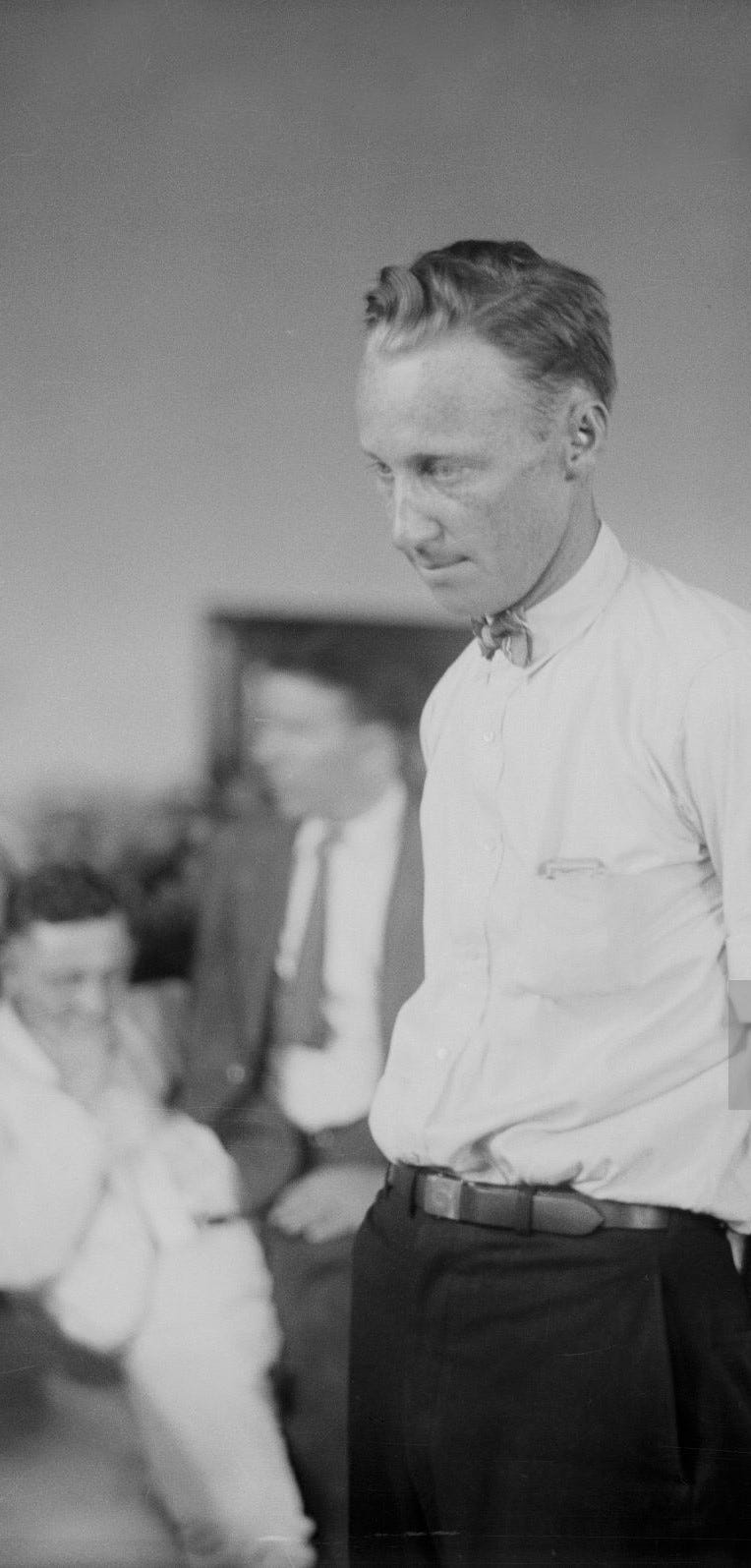
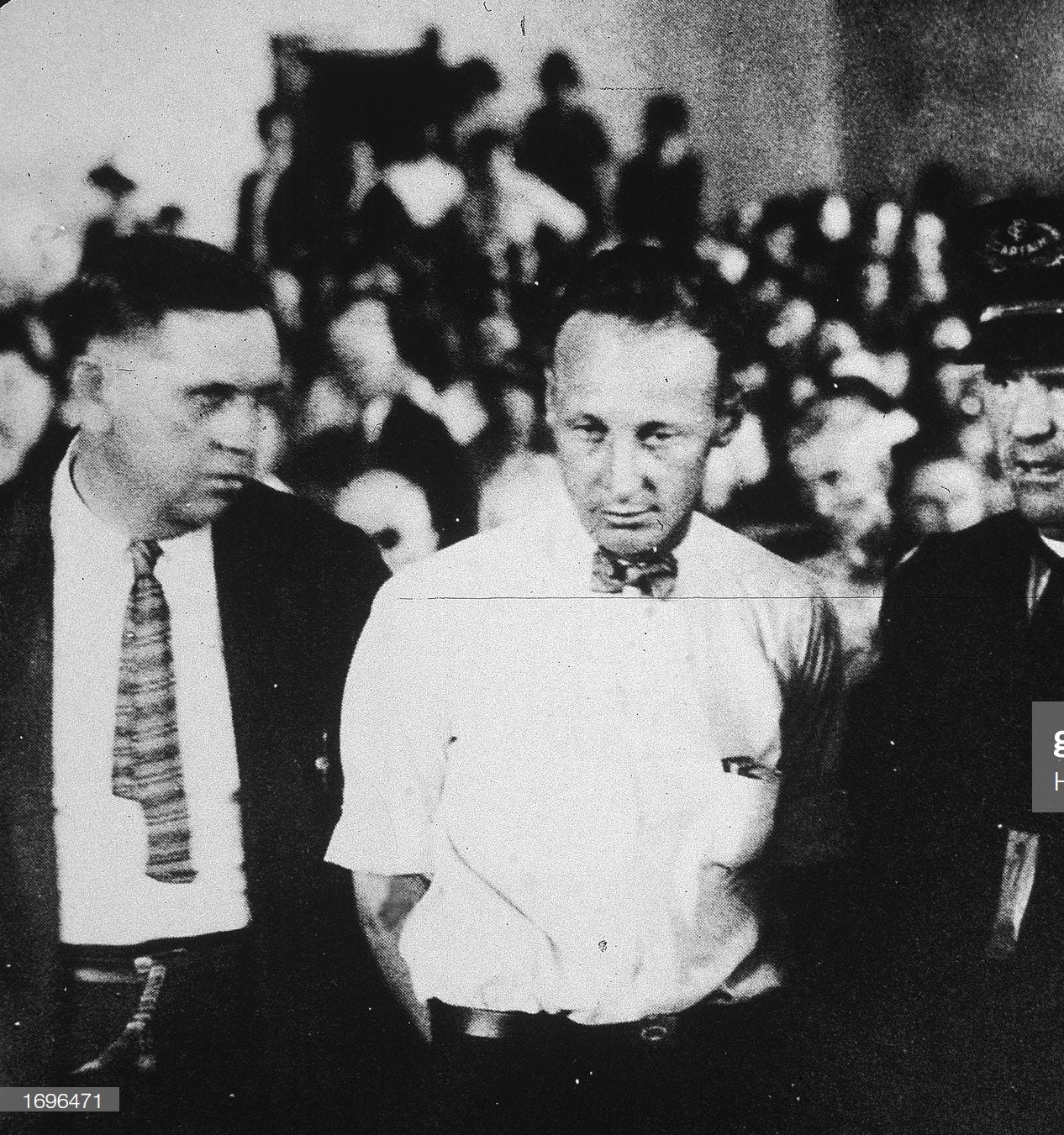
Head bowed, the teacher stood in front of the judge’s bench to hear his sentence. John Scopes was exhausted after the long, bitter trial, and his tired face showed it. “Mr. Scopes, the jury has found you guilty under this indictment,” the judge intoned.
John Scopes, a high school teacher, had been arrested for breaking Tennessee law. He was indicted by a grand jury and put on trial, his students called as eyewitnesses against him. His crime?
Teaching Darwin’s theory of evolution in a public school classroom.
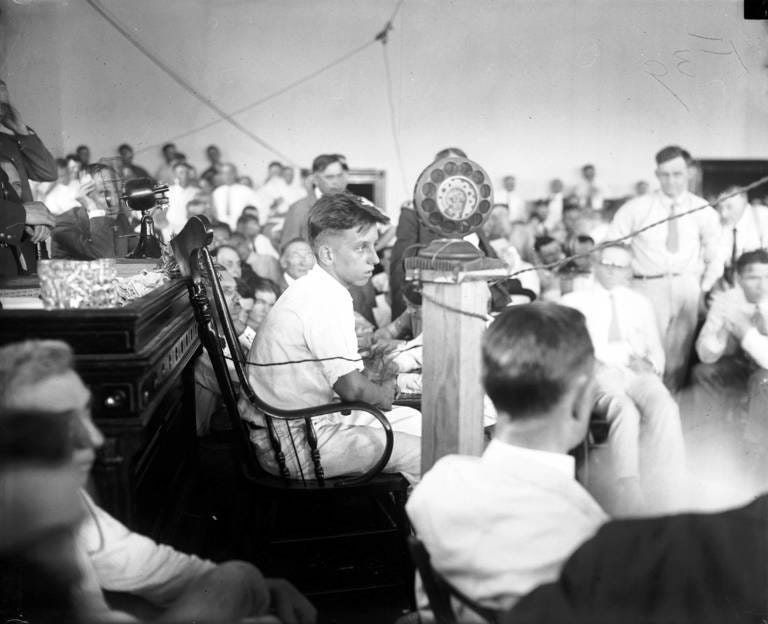
During the trial, Howard Morgan, a 14-year-old student, was asked to recall the biology lesson in question. “State what Mr. Scopes taught you,” the prosecutor demanded of the nervous boy. Howard knew the answer, almost as well as he knew his own name. He had rehearsed it often enough. Mr. Scopes himself had coached him thoroughly, preparing him for this legal cross-examination as though it was just another biology test.
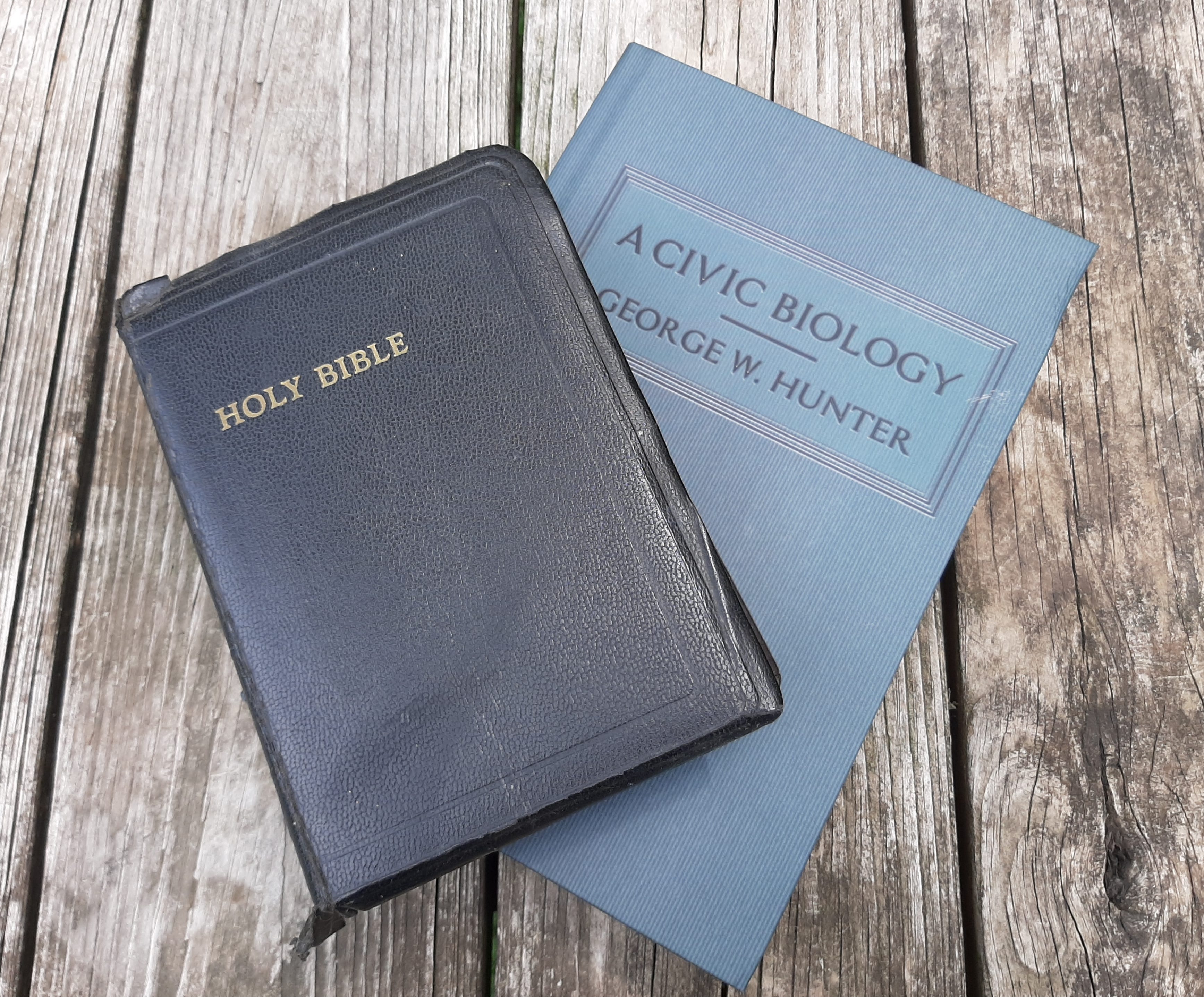
The law that banned the teaching of evolution in Tennessee, known as the Butler Anti-Evolution Act, had been passed in March, 1925, only four weeks before John Scopes was arrested. The law wasn’t controversial—in fact, almost no one had heard of it. The Butler Act hadn’t generated a huge amount of publicity. Evolution was not yet a household word across America, not even in Tennessee. Hardly anyone noticed that the restrictive law had been passed. But the lawyers of the ACLU did.
The ACLU was just getting started—it had only been organized a few years before, to defend the rights of labor union organizers. ACLU staff were now looking to broaden their reach. The Butler Anti-Evolution Act was an opportunity to get involved in a landmark case that would test one of the most cherished rights of American citizens: freedom of speech.
But to challenge the anti-evolution law, the ACLU lawyers first needed someone to break it. Newspapers across the country carried an article saying the organization was looking for a teacher who would be willing to serve as a test case, and would pay the expenses of any teacher willing to challenge the new anti-evolution law. John Scopes agreed to be that teacher. A quiet, private person, he bitterly regretted making himself the center of the media frenzy he ignited, but once started it couldn’t be stopped. The sleepy rural town of Dayton became the battleground where the new law would be put to the test.
And the stakes were high, as nineteen other states were considering similar laws. Christian Fundamentalists hoped that the Butler Act was the beginning of a wave of anti-evolution legislation that would sweep the country.
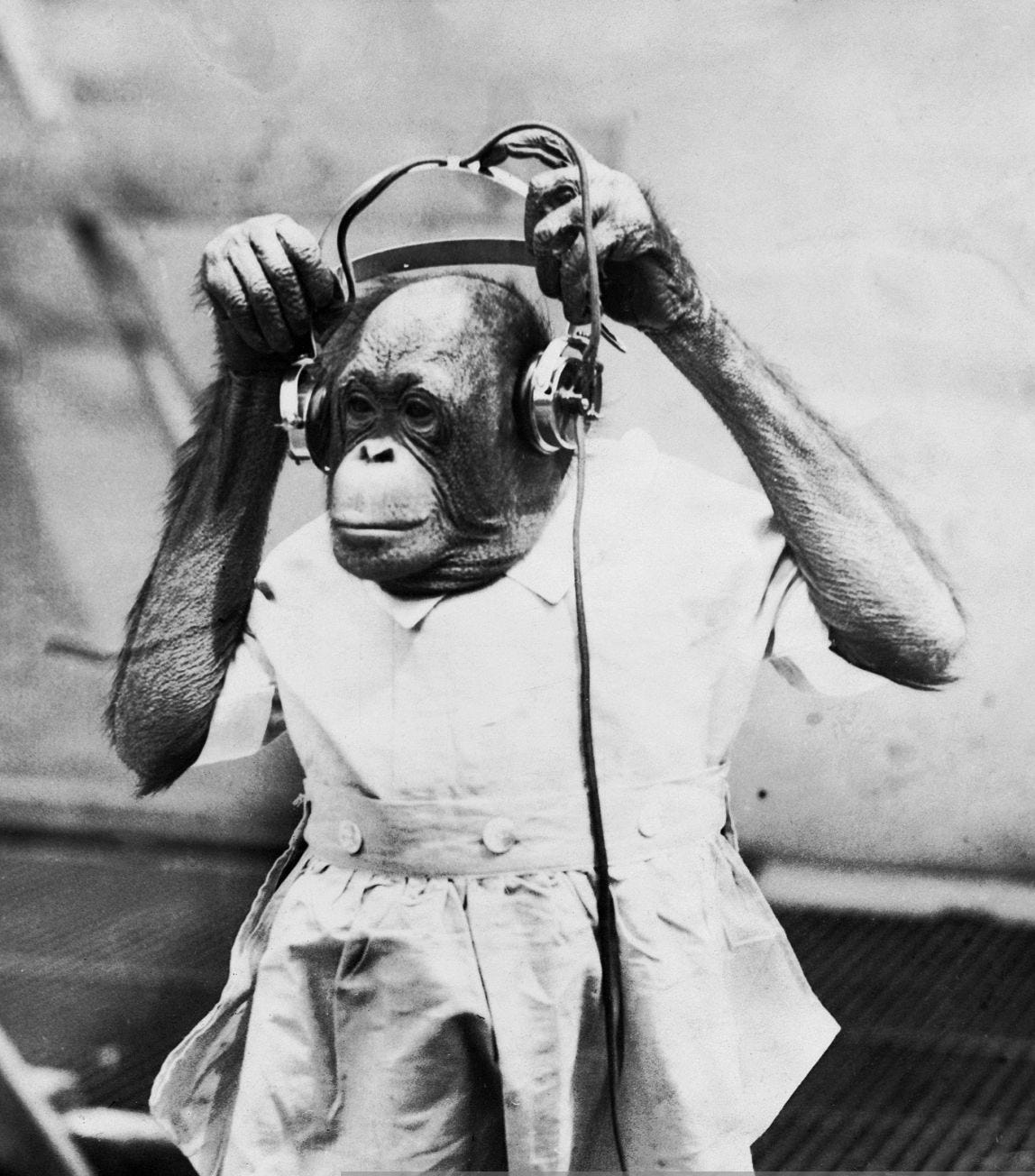
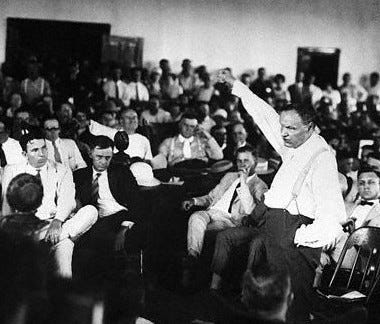
So John Scopes stepped up, and the “Monkey Trial” began. From the first, it generated an unbelievable amount of publicity. Celebrity lawyers like Clarence Darrow helped to focus attention on the trial. Almost a thousand spectators managed to squeeze into the courthouse, cracking the foundation of the building. The courtroom was rigged with the latest technology: telephone and telegraph wires, newsreel cameras, and banks of microphones, and the trial was broadcast live to millions of enthralled listeners. It made international headlines, with readers from Russia to Japan shaking their heads over the folly of Americans. (The more things change…)
There never was much doubt, in rural Tennessee, who was going to win the case. The judge started off each day in the courtroom with a lengthy prayer. After cross-examining the students, the prosecution rested its case after forty-five minutes, offering a copy of the King James Bible as an exhibit. The defense had lined up a panel of scientists as expert witnesses, but they were all barred from testifying. It took the jury nine minutes to convict John Scopes.
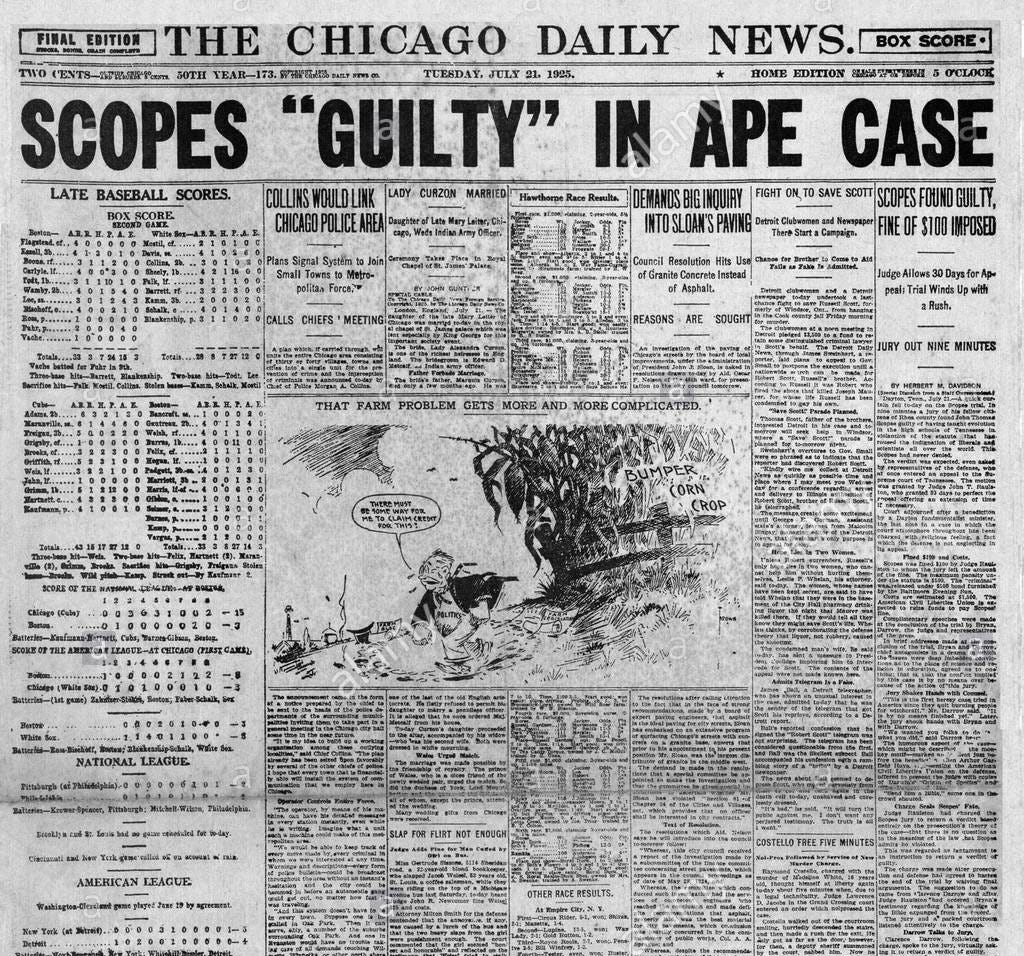
But then, John Scopes was released. The quiet schoolteacher was only fined a hundred dollars. Things went on as usual, and it seemed as though the famous Monkey Trial had ended with a whimper instead of a bang. But America would never be the same.
The massive publicity alerted the nation to the horde of restrictive laws that were on the verge of being passed. Of the nineteen states considering anti-evolution legislation, only Mississippi and Arkansas actually passed such laws (which were later found unconstitutional.) As soon as the topic was raised in any state’s legislature, there was immediate, furious controversy—and lots and lots of publicity. After the Monkey Trial, it was impossible to sneak through anti-evolution legislation with little public debate.
Although scientific testimony had been suppressed during the trial, the vast publicity in newspapers, radio, and newsreels meant that practically no American could avoid learning about evolution, whether they wanted to or not. John Scopes had taught a national biology lesson.
Because the case was eventually dismissed on appeal, due to a technicality, the Scopes case never went before the Supreme Court. But the ACLU—and John Scopes—had succeeded in making people pay attention.
I think that’s the core, the very center of what we need to do in these awful times. Get people, our neighbors, our family, our friends and our “friends” on social media—to pay attention. We all need to be aware of those quiet laws that sneak into being, rules that are passed in poorly-attended school board meetings and dull town council sessions. We need to get loud about restrictions that ban books, control classrooms and muzzle teachers. Most Americans disapprove of laws that limit our freedoms—but the laws get passed quietly, with no fanfare, while we’re all looking at one of the many outrages Trump waves to distract us.
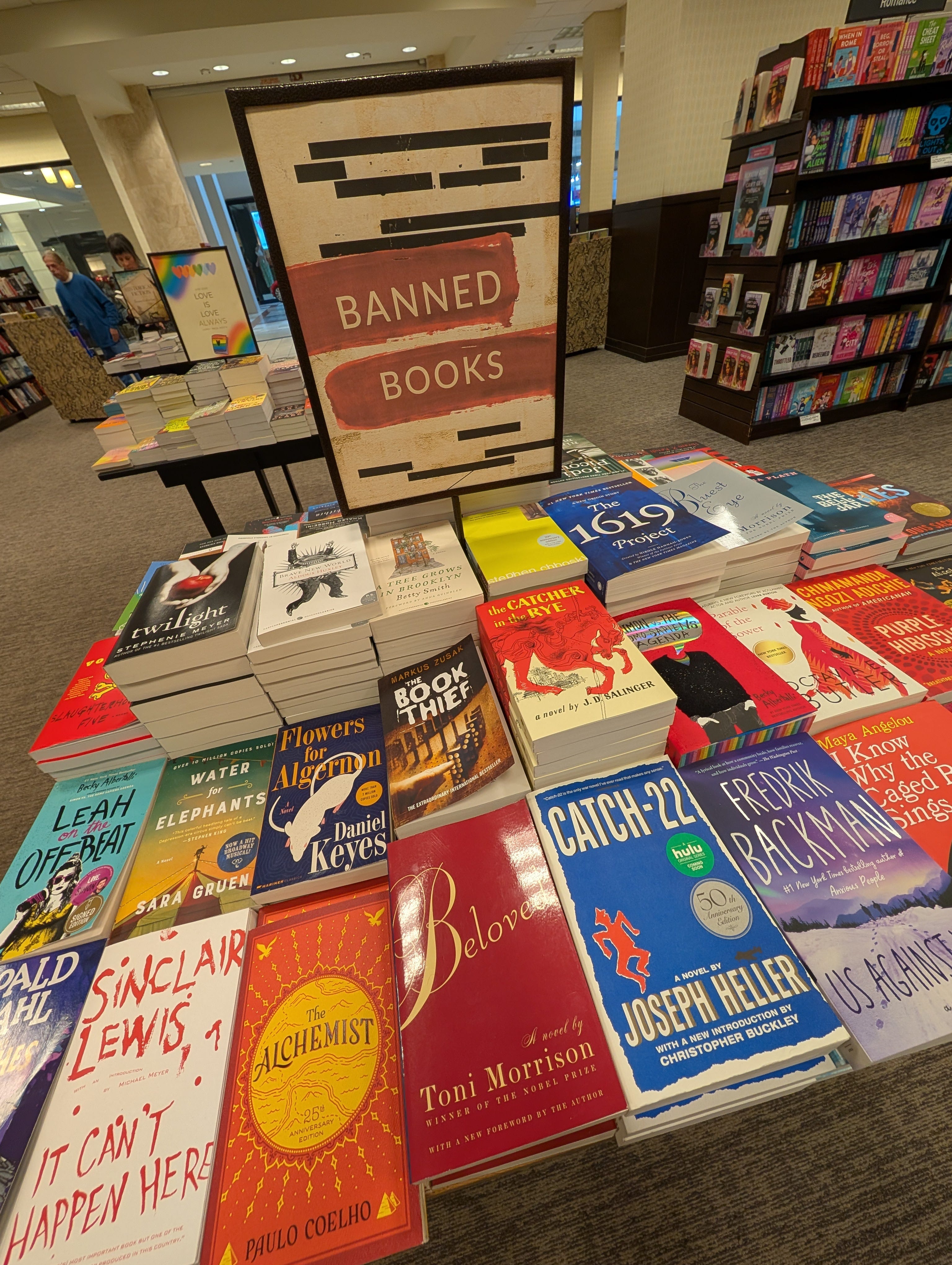
So join in the celebrations for Banned Books Week. It starts October 5. You know what to do: read a banned book, support your local library, etc. And while we’re thinking about banned books and freedom of education, think about joining the ACLU. It’s still around a hundred years later, and it’s an organization well worth your donation dollars. We don’t want to see any more teachers being tried and convicted in a court of law for the crime of teaching science.
“The truth always wins, and we are not afraid of it…We stand with fundamental freedom in America. We are not afraid.
“Where is the fear? We meet it! Where is the fear? We defy it!”
—Dudley Field Malone, ACLU lawyer on John Scope’s defense team
OCTOBER 18 NO KINGS DAY! Find a protest near you.
Dear Friends,
Are you terrified about the state of the world and wondering what to do about it? I hope you’ll continue to check out The Optimistic Activist.
Every now and then I post some ideas for doing something. How to get out the vote, spread the word, and support progressive candidates. Ideas for simple but effective activism. As easy, as practical, as do-able as I can make them.
Together, I think, we can really make a difference.
“Optimism is a strategy for making a better future.”
--Noam Chomsky