
Banned Books
It's a bad old American tradition

Book bans, library strife, and school board battles are in the news these days. But, sadly, there’s nothing new about book bans. It’s a time-honored American tradition.
In 1637, a colonist named Thomas Morton wrote The New Canaan, an account of the New World that described the beauty--and the marketability--of the North American landscape and its resources. But he also dared to get political. He was perhaps the first person in America to make fun of the Puritans.
The Massachusetts Bay Colony’s tightly controlled society had rules—lots of rules—about how to live. They were most emphatically not in favor of the separation of Church and State. Few books besides the Bible were allowed. Theater, dancing, and holidays were banned. Cursing was illegal. Church attendance was mandatory.
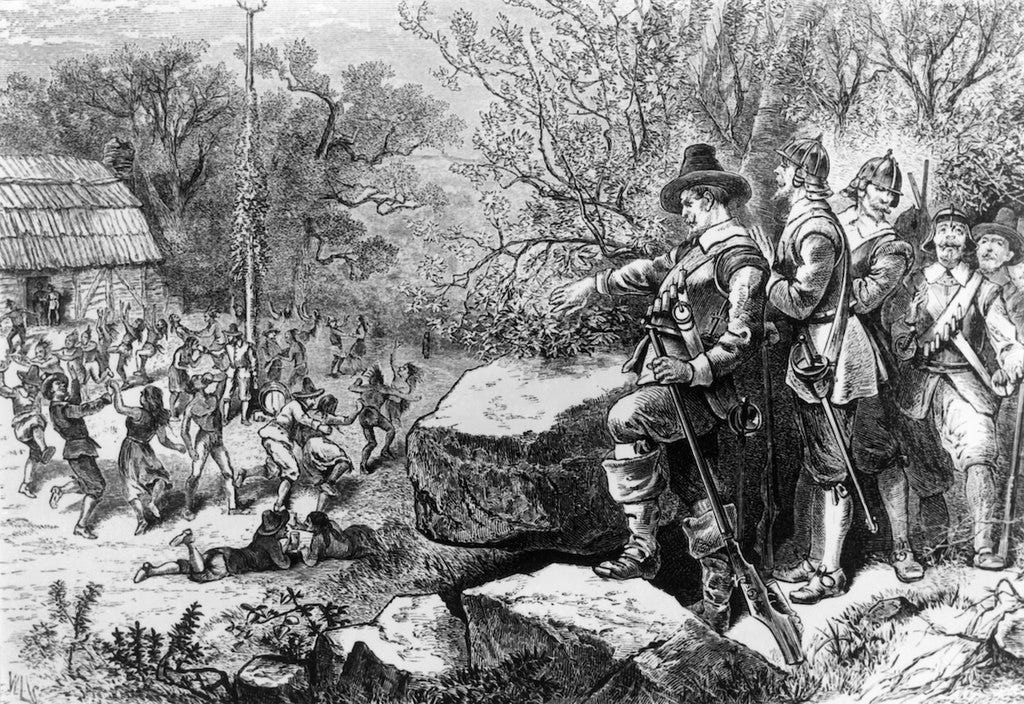
Morton, on the other hand, was an easy-going sort, much given to drinking, fornicating, and worst crime of all, dancing around a Maypole. Celebrating May Day with a jig around a Maypole seems pretty harmless, but the kill-joy Puritans arrested and jailed him.
.
So Morton wrote a book about his experiences in the New World. It contained a sharp warning for his readers: if the Puritans continued their iron-gloved control of America, imposing their religion on all facets of life, the New World would become a “Christian labor camp.” He mocked their “gloom” and poked fun at their rules and regulations. And he concluded his book with a passionate denunciation of the Puritans’ harsh and violent treatment of the Wampanoag people.
The book was promptly outlawed by the furious Puritans, making it the first banned book in America. They even attempted to block its printing in Holland, and tried to bar it from being imported to the New World. Only a few copies survived.
But book banning in America was just getting started.
Let the wild rumpus begin!
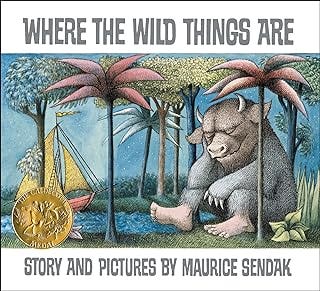
It’s hard to believe how many beloved classics were challenged when they first came out. Maurice Sendak’s Where The Wild Things Are took years to find a publisher. When it was finally printed in 1963, the story of a defiant boy horrified many adults. Disobeying his parents! A terrible example. Plainly, it might give your child some unwelcome ideas. And anyway, eminent child psychologists claimed that the monsters were far too terrifying for young children.
As a young child, Sendak was haunted by fears, which he later attributed to hearing vague stories about the tragedy of the Lindbergh baby’s kidnapping and murder, which adults tried to shield him from. Although only three years old at the time, the sense of terror and insecurity followed him for years. So he understood firsthand the fears that can traumatize children if left unconfronted. As an adult, he tried to write books that would help children deal with their emotions.
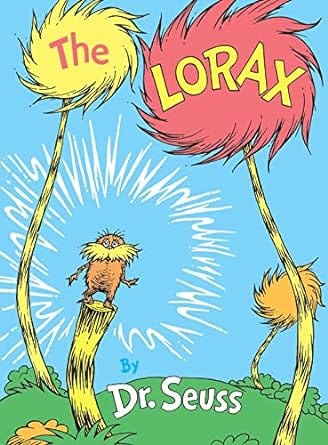
In 1971, Dr. Suess’s The Lorax became a landmark of the environmental movement, with the Lorax “who speaks for the trees” helping students learn about the importance of wildlife habitats. But the town of Laytonville, California, where logging was the main livelihood of many residents, fought furiously to ban The Lorax. Members of the school board, many of whom who were employed by logging companies, argued that the book made children think that all logging is evil. The passionate fight to ban the Lorax made bitter enemies of neighbors and created international headlines.
When the movement to oust The Lorax from schools was finally defeated, the Wood Flooring Manufacturers Association retaliated by publishing a book attempting (not very successfully) to imitate Dr. Suess’s rhyming style and illustrations. The Truax explained to children why logging is beneficial.
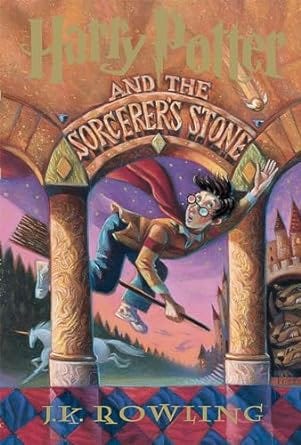
On a November evening in 2002, Reverend Douglas Taylor solemnly opened a copy of Harry Potter and the Sorcerer’s Stone, and tore it to shreds. He led a group of cheering supporters using scissors to slash the pages of dozens of copies. Taylor had applied for a permit to burn the books, but the fire department of Lewiston, Maine, had turned him down. “Harry Potter is Satanic,” he said. “This book will make you dirty.”
It’s still going on today, of course. The disease of censorship is more virulent than ever before. But even with all the hate and intolerance we hear about daily, there’s one good thing, one bright spot in all this dreadful news of book challenges and bans, removals and closures and firings.
People are talking about it.
The issue is front and center. It’s on Oprah. It’s on CNN. Book bans are newspaper editorials and talk show fodder. And they’re on social media.
Love to read? Get into the conversation. Amplify the threats. Celebrate the wins. Share posts, write letters to the editor, show up at the school board meeting. The American Library Association has an annual campaign to raise awareness. April 7-13, in case you didn’t know, is National Library Week, and Banned Books Week is coming up in September. Spread the word!
Be aware too, that soon many districts will hold critically important elections: the library budget vote and the school budget vote, which includes school board members. When is your local election? Who’s running for school board in your district?
The ironically-named Moms for Liberty are a huge threat to freedom of thought. And they had their biggest successes when they sneaked onto school boards, before people realized what a menace they were and how effective they can be. Their platform sounds so sweet, so reasonable—we’re just loving parents, is their cry, we’re only protecting our innocent children. In 2023, after a lot of publicity about their book-banning and anti-gay agenda, they were trounced at the polls in state after state. In Iowa, nine Moms for Liberty candidates lost their races after accusing local school districts of “disseminating pornography to children” for having two books that discuss LGBTQ+ acceptance.
To a teacher, librarian, or book-lover, there’s nothing more horrifying than someone slashing a book with scissors or throwing a book on the fire. But I would argue that it’s better that someone shred a book in public—because it outrages people. It makes noise. The worst-case scenario is when books are quietly removed from shelves—or just not purchased in the first place.
A silent ban is more to be feared than a controversial one. We all need to make as much noise as possible to keep this issue where it belongs—at the heart of our national debate.
Dear Friends,
Are you more than a little worried about the election of 2024 and wondering what to do about it? I hope you’ll continue to check out The Optimistic Activist.
Every week I post some ideas for doing something. How to get out the vote, spread the word, and support progressive candidates. Ideas for simple but effective activism. As easy, as practical, as do-able as I can make them.
Together, I think, we could really make a difference.
“Optimism is a strategy for making a better future.”
—Noam Chomsky
The point about the silent removal is a big deal, so I'm glad you brought that up. Another point is that just because you didn't like a book doesn't mean that everyone won't like it. We should also talk more about the Bible - being challenged in some places. Ironic that the puritans wanted the Bible in every home: the violence, sex, ostentatious wealth, plural marriage, women of ill repute being glorified! I could go on (not I won't!) Something to think about.