
April Truth
Why I Boycott April Fool's Day

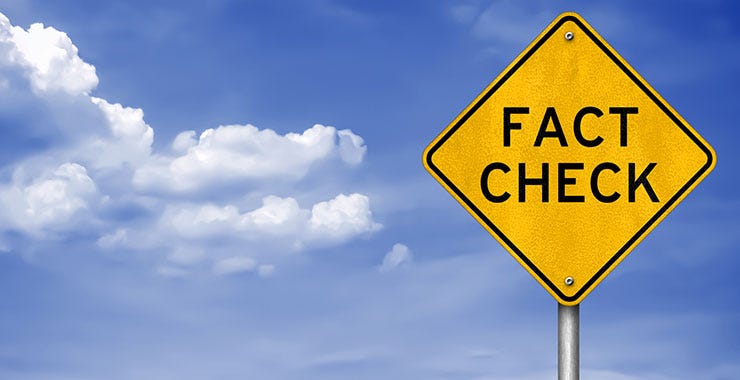
I’ve never been a big fan of holidays, but there’s one holiday that I just cannot stand. I despise, loathe, and detest it with every fiber of my being. It’s April Fool’s Day.
I know, I know. I’m a humorless, self-righteous bore who can’t take a joke. I’m blowing a bit of harmless fun all out of proportion. But in this age of lies and disinformation—when politicians talk seriously about pedophiles eating children— when network news personalities make up stories out of air—when our elections are called into question—when people die from believing lies about life-saving vaccines—April Fool’s Day is an annual reminder of how much I’ve come to value truth.
Last April first, I started my morning with my usual idle scrolling of Facebook. And, oh, dear, a political columnist I respect posted that he was going to be leaving social media. Wow, a reputable news source posted that biologists had discovered a new species of penguin. Cool, an actor I love posted that he was set to star in a new movie.
All completely credible, right? Nope, April Fool!
Why do we do this? I’ve done my share of April Fool’s tricks. I don’t anymore, though. At least a prank done in person—switching the salt and sugar, for example—is less harmful than posting lies—let’s call them what they are—on social media.
It seems to me that at its most basic level the attempt to deceive is an attempt to control someone else. April Fool’s Day fibs seem pretty harmless. But let’s not lose sight of what they really are. Disinformation.
Misinformation, according to the American Psychological Association, is an innocent mistake. And we’ve all seen that many times. An incorrect fact is posted on the internet, or published in a newspaper, or repeated person to person, and it just never goes away. “A lie can travel halfway around the world before the truth can get its pants on,” said Winston Churchill, who could really turn a phrase. Except that he didn’t turn this one—this quote is often attributed to him, and also to Mark Twain, but turns out no one knows for sure who said it first. But this piece of misinformation is all over the internet and will probably never die.
But April foolery isn’t a mistake—it’s error’s more insidious cousin: disinformation. The deliberate twisting of the truth to deceive. And while I really don’t mean to get all kerflustered about every little, innocent April Fool’s joke, haven’t we seen too much lately of the dark side of manipulating and tweaking and disregarding truth?
So this April First, I’m going to read everything, from New York Times headlines to Instagram posts, with a lot of wariness. The trick is to maintain a healthy amount of skepticism without falling down the rabbit hole of not trusting anything at all. I think that’s one of the hardest things in these difficult times—we can rarely relax into the certainty of believing something we read or hear. Truth is no longer something we can take lightly.
One thing I’m certain of. Admit it, deep down inside. No matter how good a sense of humor you have–April Fool is a lot more fun for the fooler than it is for the fooled.
Dear Friends,
Are you more than a little worried about the election of 2024 and wondering what to do about it? I hope you’ll continue to check out The Optimistic Activist.
Every Tuesday I post some ideas for doing something. How to get out the vote, spread the word, and support progressive candidates. Ideas for simple but effective activism. As easy, as practical, as do-able as I can make them.
Together, I think, we could really make a difference.
“Optimism is a strategy for making a better future.”
--Noam Chomsky
Excellent! I never looked April "fools," either. But, as you say, it can be extra dicey these days. If Trump's Bible sales ads were released today, I might have thought that was a joke. Alas, it's not! Thanks for the new look at April 1st.